The job interview is the moment when everything is at stake. You've passed the CV stage, and the recruiter wants to meet you. Here's how to maximize your chances of landing the job.
Before the interview: preparation
Research the company
This is the absolute minimum. Before every interview:
- Check the company's website, its LinkedIn page, its recent news
- Understand its business, its products/services, its position in the market
- Identify its values and corporate culture
A Moroccan recruiter will often ask you: "What do you know about our company?" Not being able to answer is disqualifying.
Prepare your answers
The classic questions in Morocco:
1. "Tell me about yourself"
This is NOT your biography. It's a 2-minute pitch: education, experience, why this position. End with what you can bring.
2. "Why do you want this position?"
Show that you understand the position and that your skills match. No generic answers.
3. "What are your strengths?"
Give 3 qualities illustrated by concrete examples from your experience.
4. "Your greatest weakness?"
Be honest but strategic. Choose a real area for improvement that you're actively working on.
5. "Where do you see yourself in 5 years?"
Show realistic ambition without giving the impression that you'll leave in 6 months.
6. "Why did you leave your previous position?"
NEVER badmouth your former employer. Stay positive: desire for growth, a new challenge, a change of sector.
7. "What are your salary expectations?"
Give a range based on your research. Don't underestimate yourself, but stay realistic.
Prepare your questions
At the end, you'll be asked: "Do you have any questions?" Answering "no" is a mistake. Prepare 3 questions:
- About the position's short-term objectives
- About the team and the organization
- About career development prospects
The big day
Punctuality
In Morocco, arrive 10 minutes early. Not too early, not late. Being late is almost disqualifying.
Attire
- Corporate company (bank, firm): suit/tailored suit
- Startup or SME: smart casual (shirt, dress pants)
- If in doubt: it's better to be overdressed than underdressed
Body language
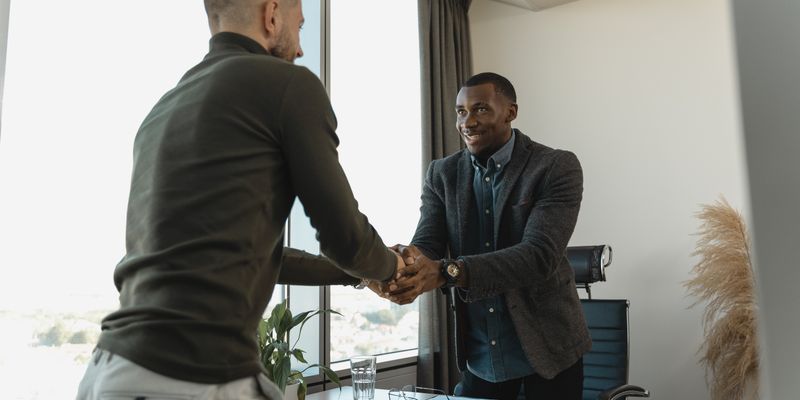
- Firm handshake
- Regular eye contact
- Upright posture, neither rigid nor slouching
- Natural smile
- Avoid crossing your arms
The language of the interview
In Morocco, interviews in the private sector are generally conducted in French. French/darija code-switching is common and acceptable. For multinationals, an interview in English may be added.
Moroccan specifics
The role of hierarchy
Respect for hierarchy is important in Moroccan professional culture. Show respect without being submissive. The balance is: confident but not arrogant.
Negotiation
Negotiating your salary is expected in Morocco. A recruiter who offers 10 000 DH often expects you to ask for 12 000. Not negotiating can be perceived as a lack of confidence.
Fatal mistakes
1. Arriving late without warning
2. Speaking badly of your former employer
3. Not knowing the company
4. Lying about your skills
5. Being too vague in your answers
6. Looking at your phone
7. Not asking questions at the end
After the interview
The thank-you message
Send a short email or WhatsApp within 24 hours. Thank them for their time, reaffirm your interest, and mention a specific point discussed during the interview. It's a simple gesture that sets you apart: 90% of candidates don't do it.
The follow-up
If you haven't heard back after the announced deadline (or after 7 days), follow up once politely.
Conclusion
A successful interview is a prepared interview. In Morocco, recruiters value sincerity, competence, and soft skills. Prepare seriously, be authentic, and show your motivation.
Find your next opportunity on Jawb.ma and get ready to land the job.